Fisherman's Bend IWM Implementation Support Materials for Developers and Council
City of Port Phillip, City of Melbourne, Fisherman’s Bend Taskforce
Fishermans Bend is Australia’s largest urban renewal project covering 480 ha of land located close to Melbourne’s CBD. The vision for the area is to be “a thriving place that is a leading example for environmental sustainability, liveability, connectivity, diversity and innovation.” Stringent development requirements were imposed by several approval authorities and the synergies and tensions of the diverse requirements were not yet well understood.
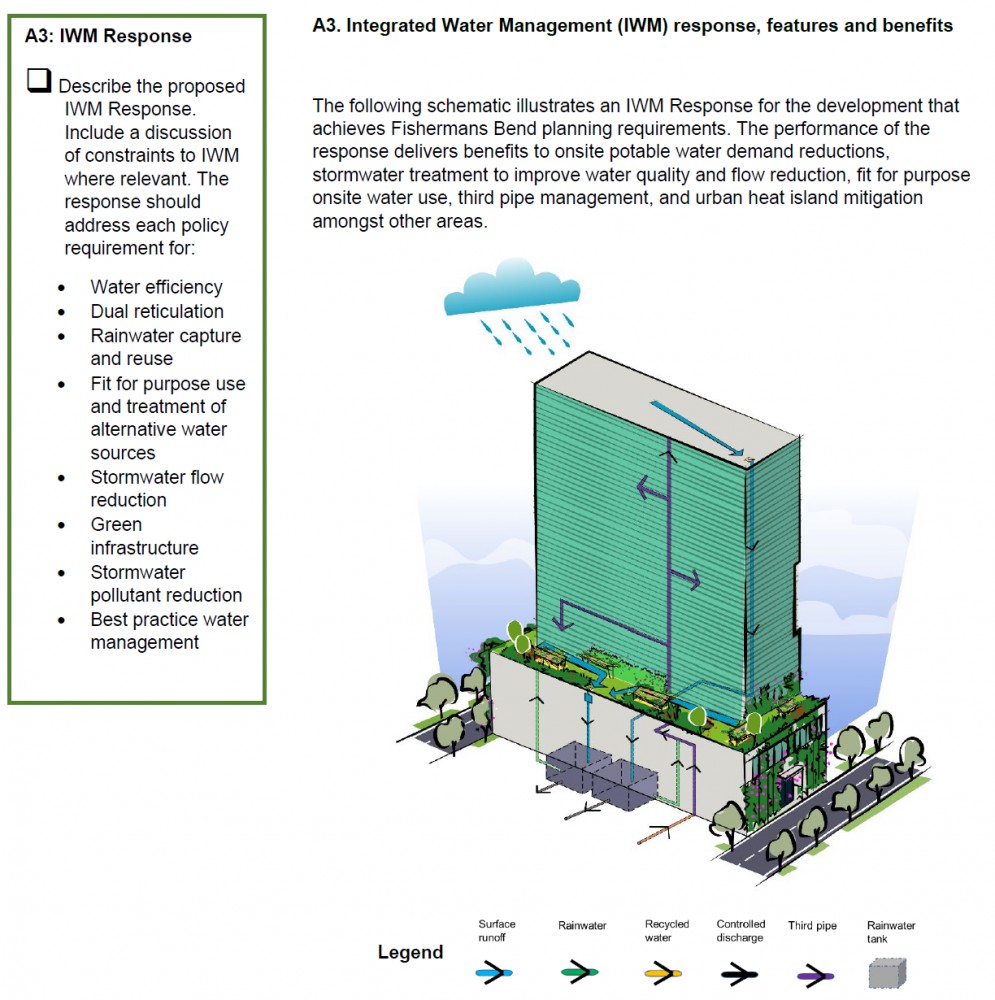
E2Designlab undertook investigations to assess compliance with Integrated Water Management (IWM) requirements and produced a series of case studies with the intent to support developer consultants and council planners to understand how they needed to comply. The case studies covered stormwater management, flood mitigation and urban greening policy. E2Designlab prepared for four development typologies typical of the precinct. Each case study presents an integrated design solution that complies with the IWM requirements, including third pipe, on site detention and reuse, and green infrastructure solutions, and includes the application of assessment tools such as MUSIC, Green Factor and the Green Star building certification system for performance rating.
To maximise the usefulness of the materials produced, significant consultation was undertaken with working group members and key stakeholders to support the project, including the City of Port Phillip, City of Melbourne, South East Water, DELWP, and the Green Building Council of Australia.
The outcomes of the project include:
- Each development-scale case studies adds to a suite of plans for larger precinct-scale IWM interventions across Fishermans Bend. They collectively enable the precinct to deliver on its vision of being a leading example for environmental sustainability, liveability, connectivity, diversity and innovation.
- They provided stakeholders with an understanding of where conflicting target thresholds and requirements remained unresolved and offered a way forward to meet the needs of both parties.
- Practical and easy to use resources for industry practitioners implemented new requirements for IWM.