Outcomes of our ‘Design of Bioretention in the West’ Review is Revealed
'A key concern in our western suburbs is whether rain gardens can survive in the dry climate'
E2Designlab recently completed a modelling study of rain gardens for Melbourne's western suburbs. The study used MUSIC to investigate soil moistures as an indicator of likely plant survivability. The outcomes indicated that rain gardens designed according to FAWB (Facility for Advancing Water Biofiltration) guidelines should have sufficient soil moisture for plant survival even in drought conditions in outer western areas. However, designs with upstream sediment basins sized larger than needed for best practice and shallow filter depths of 300 mm or less were likely to result in long dry spells causing plant stress while upstream wetlands create saturated conditions, greatly increasing failure risks.
Given good design and construction, healthy rain gardens are achievable in these areas but it is important that due consideration is given to the dry climate and the potential impacts of upstream systems are considered. The report provides a design guide to help ensure that rain gardens are appropriately designed for the western suburbs. This study is an important step in furthering our understanding of bioretention systems in dry areas to maximise their viability and sustainability.
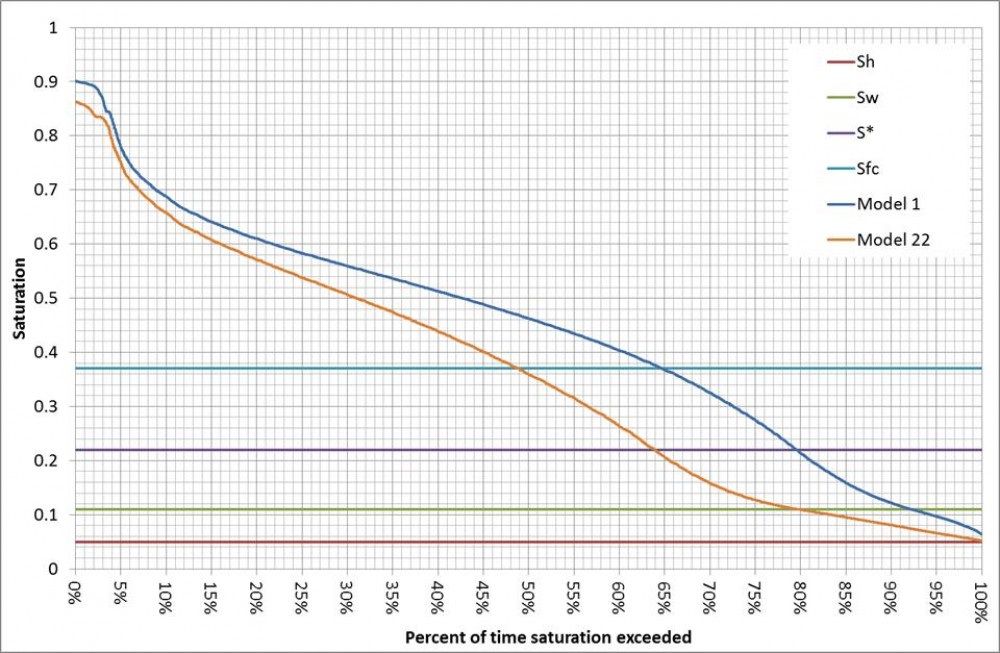
 A graph showing soil moisture saturation for rain gardens with standard (500 mm) and shallow (300 mm) filter depths. The results indicate the shallow system will spend more than 20% of the time below the wilting point (Sw) for Carex Appressa
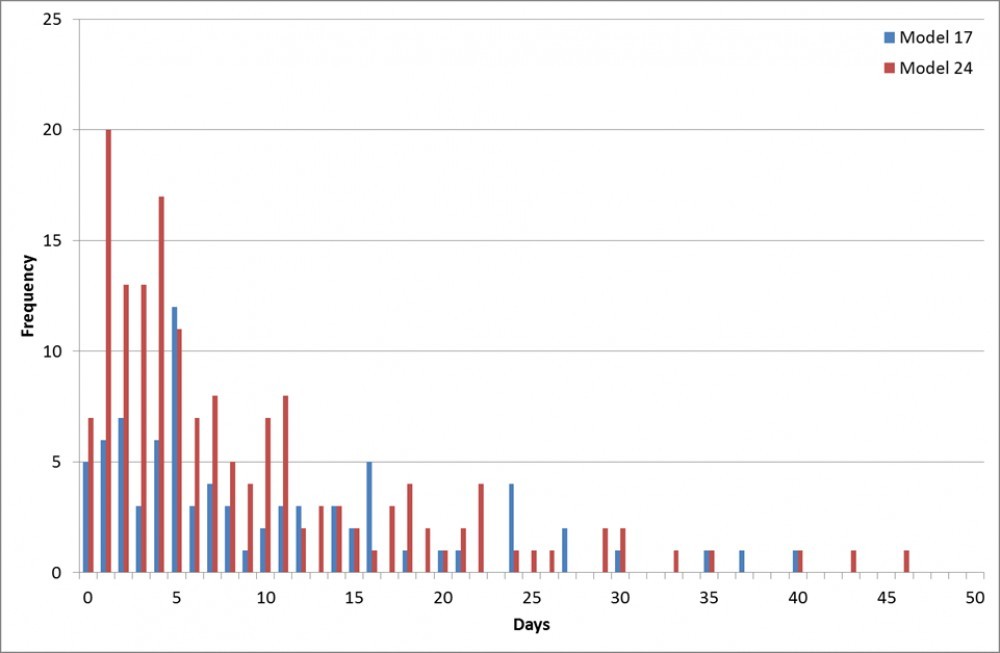
 A frequency graph shows the shallow filter depth increases the lengths of dry spells to above 40 days on at least two occasions within 10 years, placing the rain garden plants under significant stress.